What science knows about loneliness (and the study that inspired MILAE)
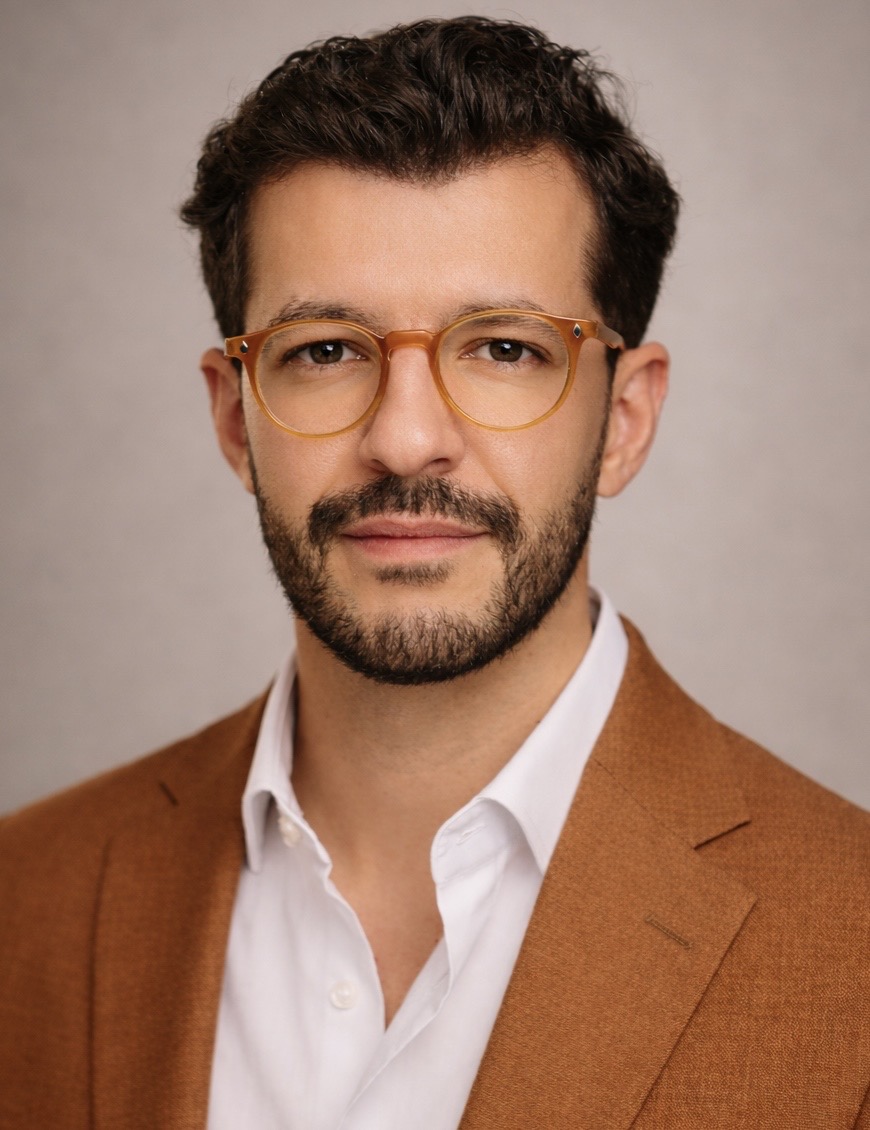
Tiago Nunes
Founder of MILAE
For years we treated loneliness as a sentimental matter. Two decades of research say otherwise: loneliness raises the risk of death, heart disease and stroke, and social isolation raises the risk of dementia. And the study that struck me most used no technology at all.
In short
Julianne Holt-Lunstad’s 2010 meta-analysis showed loneliness shortens life as much as smoking fifteen cigarettes a day, and later research linked it to heart disease, stroke and dementia. It is not solved by another device on the wall, but by regular presence and someone who notices absence.
There is a line that shows up whenever loneliness comes up: it is as bad for you as smoking fifteen cigarettes a day. I used it once in a conversation and someone asked me where it came from. I went looking. The answer is more interesting than the line itself.
Three hundred thousand lives, one number
In 2010, Julianne Holt-Lunstad, a researcher at Brigham Young University, published in PLoS Medicine one of the largest reviews ever done on social relationships and mortality: 148 studies, more than 308,000 people, followed for an average of seven and a half years. The conclusion fits in one line: people with strong social relationships had 50% higher odds of survival than those without them.
The effect held for men and women, young and old, the healthy and the ill. And it was comparable, the authors wrote, to well-established risk factors such as smoking. That's where the fifteen-cigarettes image was born: in one of its charts, the study uses smoking fewer than fifteen cigarettes a day as a point of comparison. What is not written there is the catchphrase. It was the translation the world found for a number that was hard to ignore, and it was the US Surgeon General who adopted it in full in 2023, in an advisory that declared loneliness a public health epidemic.
Loneliness and isolation are not the same thing
Before going on, a distinction that almost always gets lost. Social isolation is objective: how many people you talk to, who is around you, how many visits you get. Loneliness is subjective: it is the gap between the company you have and the company you wish you had. You can live surrounded by people and feel lonely. And you can live alone and not feel it.
The distinction matters because the numbers differ. In a second review, in 2015, now covering more than three million people, the same team measured the two separately: social isolation raises the risk of death by 29%, loneliness by 26%, living alone by 32%. It's worth reading twice: you don't need to feel anything to be at risk. It is enough that nobody shows up.
What the body does with silence
The effects don't stop at mortality. A meta-analysis published in the journal Heart in 2016 linked poor social relationships to a 29% higher risk of coronary heart disease and a 32% higher risk of stroke. The Lancet Commission on dementia prevention put social isolation on the short list of modifiable risk factors, accounting for about 4% of cases in the 2020 report; the 2024 update puts it at 5%. And in 2025 the World Health Organization put a global number on the table: loneliness is associated with more than 871,000 deaths a year. One hundred every hour.
When the WHO creates a commission for a topic, as it did in 2023, and the World Health Assembly adopts a resolution on it, as happened in May 2025, that topic has stopped being sentimental. It has become public health.
The study that stayed with me
Of everything I have read about loneliness, the study that struck me most doesn't have a single sensor, app or algorithm in it. It has people on the phone.
During the pandemic, a team at the University of Texas recruited sixteen volunteers, most of them students, gave them one hour of training in empathetic listening, and asked them to call 120 at-risk people regularly, clients of a meals-on-wheels service, most of them over 65. Calls meant to last under ten minutes, daily in the first week and then two to five times a week, for one month. No scripts, no therapy, no technology beyond the telephone each person already had at home. The results came out in JAMA Psychiatry in 2021: loneliness fell measurably, and so did depression and anxiety.
One hour of training. A telephone. Four weeks. That study convinced me that what protects people is not the device: it is the regular conversation, at the right time, with someone who notices. The rest, the part we do with technology at MILAE, exists to make sure that conversation happens every day and that someone finds out when something changes. The how is our job. The why is in these studies.
What is not yet proven
I should be just as clear about what science hasn't shown yet. I know of no randomised controlled trial measuring, over time, the effect of a voice AI on loneliness in older people. The strong evidence is about human, empathetic calls. That is also why MILAE doesn't present itself as a replacement for anyone: the call guarantees regular presence and signals to social care services who needs human attention. The conversation that matters is the one that happens next.
Loneliness is not solved by one more gadget on the wall. It is solved by regular presence and by someone who notices absence. Science, for once, says the same as common sense. Now with numbers.
Sources
- Holt-Lunstad J, Smith TB, Layton JB. Social Relationships and Mortality Risk: A Meta-analytic Review. PLoS Medicine, 2010
- Holt-Lunstad J, et al. Loneliness and Social Isolation as Risk Factors for Mortality. Perspectives on Psychological Science, 2015
- Valtorta NK, et al. Loneliness and social isolation as risk factors for coronary heart disease and stroke. Heart, 2016
- Livingston G, et al. Dementia prevention, intervention, and care: 2020 report of the Lancet Commission. The Lancet, 2020
- Livingston G, et al. Dementia prevention, intervention, and care: 2024 report of the Lancet standing Commission. The Lancet, 2024
- WHO. From Loneliness to Social Connection: report of the WHO Commission on Social Connection, 2025
- US Surgeon General. Our Epidemic of Loneliness and Isolation, 2023
- Kahlon MK, et al. Effect of Layperson-Delivered, Empathy-Focused Program of Telephone Calls on Loneliness, Depression, and Anxiety. JAMA Psychiatry, 2021
Want to know how MILAE keeps in touch with isolated older people through regular phone calls?
See how MILAE works